






Sample chopping is not about cutting a loop into smaller pieces. It is about changing the relationship between the original recording and the beat you are trying to make.
The same four bar sample can become seven completely different records depending on where you cut it, what you ignore, what you repeat, what you pitch, and what you resample.
That is why good chopping is less about finding the correct slice and more about choosing the right method for the source.
In this guide, we are going to take one idea and look at seven different chopping techniques that can turn it into something new. Some preserve the original musical phrase. Some destroy it. Some rely on timing. Some rely on pitch. Some only become interesting after you print the first version and chop it again.
The goal is not to learn seven tricks. The goal is to understand seven different ways of thinking about a sample.
The Short Answer
The seven techniques are:
- Phrase Chopping: cut complete musical ideas and rearrange them.
- Transient Chopping: cut around attacks, notes, stabs, drums, and vocal fragments.
- Off Grid Chopping: keep pickups, tails, breaths, and imperfect timing instead of forcing every slice to the grid.
- Non Linear Resequencing: stop playing the sample in its original order and build a new phrase.
- Pitch First, Chop Second: change pitch and speed before deciding where the chops should be.
- Resample and Rechop: build a first version, process it, print it, and chop the processed result again.
- Negative Space and Tail Chopping: use silences, reverbs, decays, breaths, and fragments most producers throw away.
You can use every technique on MPC, SP 404, Maschine, Ableton, FL Studio, Logic, or almost any sampler that lets you set start and end points. The important part is the decision, not the machine.
Before You Chop Anything, Listen to the Sample as Music
The fastest way to make generic chops is to start cutting before you understand the source.
Play the sample from beginning to end several times.
Listen for:
- The strongest musical phrase.
- Notes that can work as beginnings.
- Notes that can work as endings.
- Drum transients hidden inside the sample.
- Vocal breaths and ad libs.
- Reverb tails.
- Changes in harmony.
- Moments where the instrumentation becomes thinner.
- Small mistakes or timing movements that give the recording personality.
Do not ask only, “Where can I cut this?”
Ask, “What is this sample giving me?”
A soul composition with long chords wants a different chopping approach from a dry piano stab. A vocal phrase wants a different approach from a dense orchestral recording. A sample with drums already inside it may give you rhythmic information that becomes more important than the melody itself.
Technique 1: Phrase Chopping
Phrase chopping is the least destructive method in this guide.
Instead of cutting every note, you divide the source into larger musical ideas.
Imagine a four bar sample:
A | B | C | DEach section may contain a chord change, a melodic response, or a complete rhythmic phrase.
You can turn it into:
A | B | A | Dor:
C | A | B | Bor:
A | D | C | AThe sample still sounds musical because you are preserving larger pieces of the original performance, but the arrangement no longer follows the source exactly.
When Phrase Chopping Works Best
Use phrase chopping when:
- The original sample already has strong musical movement.
- You want the recording to remain recognizable as a performance.
- The chords or melody are too complex to cut into tiny pieces.
- You want to create a new loop quickly without destroying the feel.
How to Make Phrase Chopping More Interesting
The mistake is cutting four equal sections and playing them in another order.
Try making the phrases different lengths.
One chop could be almost a full bar. Another could be half a bar. Another might only contain the last note before a chord change.
That creates tension because the listener stops predicting where the source will move next.
You can also let one phrase overlap into the next. A small piece of room tone or reverb at the end of the chop can make the sequence breathe instead of sounding like four files glued together.
Technique 2: Transient Chopping
Transient chopping treats the sample like a collection of playable events.
Instead of thinking in bars, listen for attacks:
- Piano notes.
- Guitar picks.
- Horn stabs.
- Vocal syllables.
- Drum hits.
- Bass attacks.
- Short orchestral accents.
Each transient can become a pad.
This method can turn a complete recording into something much closer to a new instrument.
Do Not Let Automatic Detection Make Every Decision
Threshold based chopping can be useful for finding obvious attacks, but it does not know which moments matter musically.
A quiet note may be more useful than a loud one.
A transient can also begin before the visible peak. If you cut exactly at the tallest point of the waveform, you may remove the tiny pickup that makes the note feel natural.
Use automatic detection to move faster, then adjust the start points by ear.
Build a Playable Program
Once you have the main transients, stop thinking about the original sample.
Play the pads like a new instrument.
Try:
- Repeating one note several times.
- Leaving a gap after a short attack.
- Using a low note as a bass accent.
- Playing a melodic chop against a vocal fragment.
- Alternating two similar attacks with different tails.
The strongest transient based flips often sound simple because the producer has stopped trying to preserve every part of the original composition.
Technique 3: Off Grid Chopping
A lot of lifeless sample chopping comes from cutting everything too cleanly.
The original recording may contain a pickup before the note, a small breath before the vocal, or a drummer pulling slightly ahead of the beat.
If you cut all of that away, you also cut away part of the pocket.
Keep the Movement Before the Main Event
Try moving a chop start slightly earlier than the obvious note.
You may capture:
- A finger noise.
- A breath.
- A short drum pickup.
- A cymbal tail from the previous beat.
- A tiny piece of room tone.
Those details can make the pad feel late or early when played from the grid, even if your sequence itself is quantized.
This is an important distinction.
You do not always need to move the MIDI event to create swing. Sometimes the swing already exists inside the chop.
Do Not Make Every Start Point Perfect
Some chops should begin immediately.
Some should contain a few milliseconds of air.
Some should drag into the note.
That inconsistency can be useful when the original performance has character.
The objective is not random timing. The objective is preserving movement that helps the groove.
Technique 4: Non Linear Resequencing
This is where a lot of sample flips either become original or remain obvious.
If the original sample plays:
1 | 2 | 3 | 4 | 5 | 6 | 7 | 8and your sequence plays:
1 | 2 | 3 | 4 | 5 | 6 | 7 | 8you have chopped the sample, but you have not really rewritten it.
Force yourself to begin somewhere else.
Try:
5 | 2 | 5 | 8or:
3 | 3 | 1 | 6 | 4or use one chop as a repeated anchor while the other pads change around it.
Find the New Downbeat
One of the strongest techniques is taking a note that originally appeared in the middle of a bar and making it the first sound of your new loop.
This changes how the listener hears the harmony.
A transition can become a beginning.
A passing chord can become the main chord.
A background response can become the hook.
Do Not Fill Every Space
Non linear resequencing becomes more interesting when you leave holes.
A sequence does not need a chop on every eighth note or every sixteenth note.
Play one phrase. Stop. Let the drums answer. Bring the sample back with a different chop.
That interaction between sample and silence is often more effective than a constantly moving chop pattern.
Technique 5: Pitch First, Chop Second
Most producers do this in the opposite order.
They chop the original sample, then pitch the pads.
Try pitching the entire source before you set a single chop point.
Why This Changes the Sample
When you pitch a sample down, several things happen:
- The performance becomes longer.
- Small textures become easier to hear.
- Transitions gain more space.
- Short notes can become usable phrases.
- Background noise becomes more obvious.
When you pitch it up:
- The performance becomes tighter.
- Long phrases can turn into short stabs.
- Slow melodic movement becomes more rhythmic.
- The character can become more nervous or urgent.
The new speed reveals new chop points.
Try Several Versions Before Committing
Make copies of the source at different pitches.
For example:
Original
Minus 3 semitones
Minus 5 semitones
Plus 2 semitones
Listen to all four before chopping.
The version with the most interesting texture may not be the version with the most convenient key.
Once the sample has the right emotional weight, start cutting.
Technique 6: Resample and Rechop
This is one of the most powerful ways to stop a flip sounding like the original source.
Do not expect the first chop program to be the final instrument.
Create a first version.
Then print it.
Then chop the printed version again.
A Simple Resampling Workflow
- Chop the original sample.
- Create a short sequence.
- Add pitch, filtering, saturation, or another effect.
- Resample the complete phrase to new audio.
- Load that new audio as a fresh sample.
- Find completely new chop points.
- Build a second sequence from the processed version.
Now you are no longer chopping the source.
You are chopping your own performance of the source.
Why This Works So Well
The first sequence changes the timing.
The processing changes the tone.
The resampling turns all of those decisions into one new piece of audio.
When you cut that new audio again, the second generation inherits your decisions instead of the original arrangement.
This is also where the different hardware philosophies we discussed in MPC vs SP 404MKII for Boom Bap become useful. The MPC gives you a structured way to build and edit the first program. The SP makes repeated resampling and effects extremely immediate.
Neither approach is better. The important part is understanding that resampling is not only an effect. It is a way of creating new source material.
Technique 7: Negative Space and Tail Chopping
Most producers look for the obvious musical event.
The chord.
The vocal.
The horn.
The drum hit.
But the material around those events can be just as useful.
What to Look For
Search the source for:
- Reverb tails.
- Breaths.
- Room noise.
- Decay after a piano note.
- Reverse sounding transitions.
- Cymbal washes.
- Silence with tape or vinyl texture.
- A note cut off before it fully resolves.
Put those sounds on pads.
Use them between the main chops instead of adding another melodic note.
Create Ghost Chops
A ghost chop is a quiet fragment that does not carry the main melody but creates movement.
For example:
- A short vocal breath before the snare.
- A reverb tail at the end of bar four.
- A tiny texture before the main phrase returns.
- A quiet note played at low velocity under a drum fill.
This gives the sample arrangement depth without turning it into a busy sequence.
Negative space is not empty. It is part of the rhythm.
The Same Sample, Seven Different Beats
Now imagine we start with one four bar soul sample.
It contains piano, bass, a vocal texture, light drums, and a long reverb tail at the end.
Version 1: Phrase Chop
We cut the sample into four large musical phrases.
The result still feels soulful and cinematic, but the chord order changes.
Version 2: Transient Chop
We ignore the phrases and cut individual piano attacks, vocal pieces, and bass notes.
The sample becomes a playable instrument.
Version 3: Off Grid Chop
We keep the drum pickups and the air before several notes.
The new sequence feels looser without changing the sequencer timing.
Version 4: Non Linear Resequencing
We start with a chord that originally appeared in bar three and turn it into the new downbeat.
The harmonic center changes completely.
Version 5: Pitch First
We pitch the complete source down five semitones before chopping.
A transition that was too short in the original recording becomes a full playable phrase.
Version 6: Resample and Rechop
We make a first pattern, filter it, add saturation, print it, then cut the new audio again.
The second program barely resembles the structure of the source.
Version 7: Negative Space
We use the piano decay, a vocal breath, and the final reverb tail as ghost chops between the main musical fragments.
The beat becomes more atmospheric even though we are using less melody.
Same sample.
Seven records.
That is the point.
Full Samples vs Pre Cut Chops
There is a useful difference between loading a full sample and loading material that has already been cut.
A full sample gives you complete control over the first decision.
You choose:
- The pitch.
- The chop points.
- The phrase length.
- The amount of silence.
- The original context you want to preserve.
Pre cut material moves you past that first technical step.
The important thing is that it should save time without making the creative decision for you.
You still decide the order, timing, pitch, velocity, processing, layering, and relationship between the chops.
That distinction is central to the current Soul Chemist workflow.
How MR.FOOD Uses Both Approaches
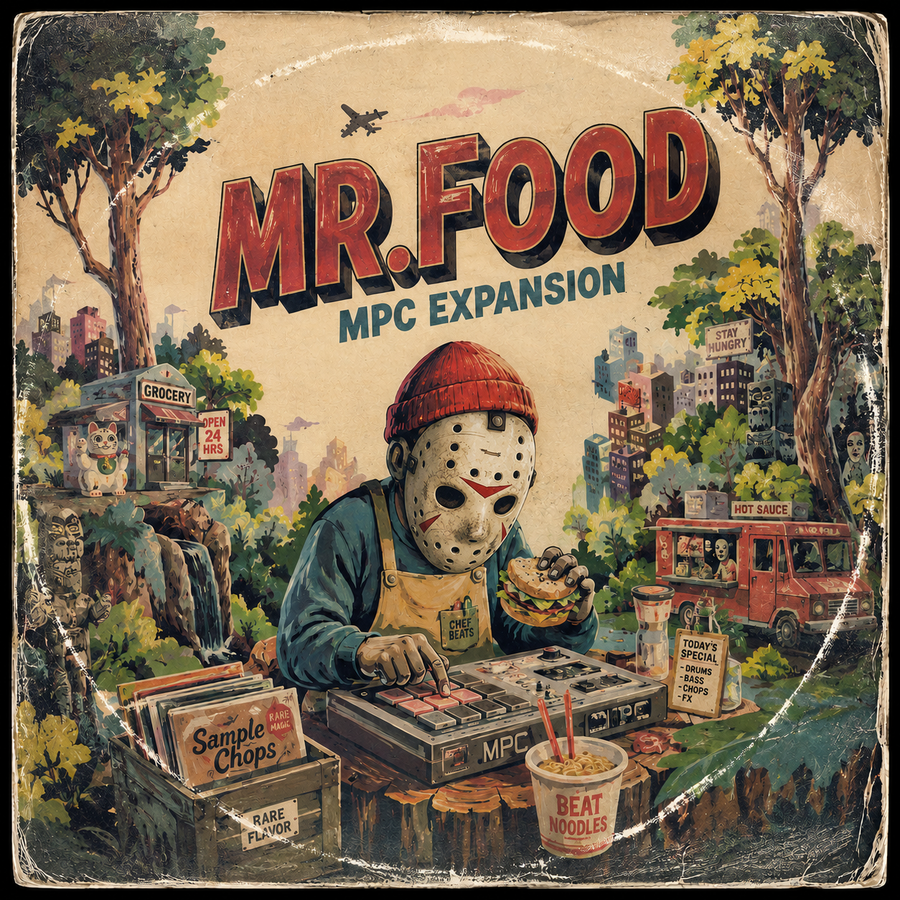
MR.FOOD includes both complete source material and material prepared for immediate pad work.
The expansion contains 40 full samples and 544 sample chops alongside 30 complete MPC kits, 27 drum breaks, 25 bass sounds, more than 150 drum sounds, textures, FX, and a dedicated production template.
The two sample formats solve different problems.
Use the full samples when you want to decide everything yourself. Pitch the source first. Find different chop points. Build a completely new program.
Use the 544 prepared chops when you want to begin with sequencing and performance immediately. Change the order. Retune them. Add silence. Resample the phrase. Rechop the result.
The prepared chop should be a starting point, not the finished idea.
LOAD. PLAY. CREATE.
How to Choose the Right Technique
Do not use all seven techniques because they exist.
Choose the method that solves the problem in front of you.
| Problem | Technique to Try |
|---|---|
| The sample already sounds good but too recognizable | Non Linear Resequencing |
| The sample feels stiff after chopping | Off Grid Chopping |
| The source contains beautiful long musical movement | Phrase Chopping |
| You want the sample to behave like an instrument | Transient Chopping |
| The original sample feels too clean or too obvious | Resample and Rechop |
| The source is moving at the wrong emotional speed | Pitch First, Chop Second |
| The sequence needs atmosphere without more melody | Negative Space and Tail Chopping |
How to Make Chops Work With the Drums
A good sample sequence can still fail when the drums enter.
Do not treat the sample and drums as two independent loops.
Listen to where the sample attacks happen.
If a strong chop lands exactly with every kick, the beat may become too heavy and predictable.
Try moving some sample attacks between the drums.
Let the snare answer a melodic phrase.
Leave space before an important kick.
Use a short tail chop where another producer might add a hi hat.
The sample should participate in the groove.
For a deeper guide to building the rhythmic side, read How to Make Boom Bap Drums: The Complete Guide.
If you are working with complete breaks rather than one shots, read How to Process Drum Breaks Without Killing the Groove.
Do Not Confuse More Chops With Better Chops
Sixteen pads do not require sixteen ideas.
Some of the strongest beats are built around four or five pieces of audio.
A good chop gives you a clear reason to press the pad.
If two chops perform exactly the same function, keep the stronger one.
If a pad only exists because the sampler found another transient, delete it.
Limitations become useful when they force you to perform the sample instead of browsing it.
Chopping Inside an MPC
The MPC is particularly strong when you want to keep the source editable for longer.
You can create a chop program, refine start and end points, change pad behavior, tune individual pieces, create mute relationships, and continue editing after the first sequence is already working.
This makes it ideal for techniques such as transient chopping and non linear resequencing because the program can continue evolving with the beat.
MPC expansions can reduce the preparation stage even further by putting organized material directly under the pads.
If that workflow is new to you, read What Is an MPC Expansion and How Does It Work?.
For the difference between loose WAV files and a prepared MPC environment, read Sample Pack vs MPC Expansion: Which One Do You Need?.
Chopping Inside an SP 404MKII
The SP becomes especially interesting when chopping and resampling stop being separate stages.
You can build a phrase, process it, print it, then treat the printed audio as a new source.
This makes Technique 6 especially natural.
The point is not to reproduce an MPC workflow on the SP.
Use the machine for what it encourages.
For a full comparison of those two philosophies, read MPC vs SP 404MKII for Boom Bap.
A 20 Minute Chopping Exercise
Use this exercise with one sample.
- Minutes 1 to 3: listen without chopping. Mark the strongest phrases mentally.
- Minutes 4 to 6: build four phrase chops.
- Minutes 7 to 9: create a second version using only transients.
- Minutes 10 to 11: move several chop starts away from the obvious grid points.
- Minutes 12 to 13: create a sequence that never plays the chops in original order.
- Minutes 14 to 15: pitch the source and find one new chop you could not hear before.
- Minutes 16 to 18: resample your strongest sequence and chop the new audio again.
- Minutes 19 to 20: add one tail, breath, room sound, or silent texture as a ghost chop.
At the end, do not keep all seven versions.
Choose the one that sounds like a record.
Common Sample Chopping Mistakes
Cutting Only on the Grid
The grid is useful for reference. It is not a musical rule.
Keeping the Original Order
If the source still plays from beginning to end, the chop may not be doing enough.
Making Every Chop the Same Length
Different lengths create tension, breath, and unexpected transitions.
Ignoring Pitch Until the End
Pitch can reveal better chop points before you start programming.
Using Every Available Pad
More slices often create more decisions without creating a better beat.
Cleaning Every Start Point
Removing all pickups, breaths, and tails can remove the pocket.
Never Resampling the First Version
The first sequence can become source material for a much stronger second version.
Adding Drums Without Listening to the Sample Rhythm
The best drums respond to the chops instead of competing with them.
Frequently Asked Questions
How many chops should I make from a sample?
There is no correct number. Use enough chops to perform the idea you hear. Four strong pieces can be more useful than thirty weak ones.
Should I chop by transients or equal regions?
Use transients when you want to capture musical events. Equal regions can be useful for experimentation, but they should not replace listening. The source should decide the method.
Should I pitch a sample before or after chopping?
Try both. Pitching before chopping changes the timing and texture of the complete source, which can reveal completely different cut points. Pitching individual chops afterward gives you more control over the final program.
What is the best chopping technique for boom bap?
There is no single best technique. Phrase chopping works well when the sample already contains strong musical movement. Transient chopping and non linear resequencing are stronger when you want to rewrite the source. Resampling is especially useful when the first version still sounds too recognizable.
Do I need an MPC to chop samples?
No. Any sampler or DAW that lets you define sample start and end points can use these techniques. The MPC changes the workflow, not the fundamental idea.
Are pre chopped samples less creative?
No. They remove one technical step. You still make the important decisions about sequence, rhythm, pitch, velocity, processing, layering, and resampling.
How do I make chopped samples sound less repetitive?
Use different phrase lengths, remove predictable repetitions, introduce silence, create alternate end chops, use low velocity ghost chops, and build small variations at the end of every second, fourth, or eighth bar.
Should I quantize chopped samples?
Only when the beat needs it. Quantization can create a strong pocket when the source contains movement inside each chop, but completely rigid timing can also remove the feel. Compare quantized and unquantized versions at the same tempo.
Final Thoughts
Sample chopping is not a technical exercise.
It is composition through selection.
You decide which part of the original recording becomes important, which part disappears, and which part gets a new meaning.
Start with phrase chopping when the source already feels musical. Use transient chopping when you want a playable instrument. Keep imperfect starts when they add pocket. Break the original order. Change the pitch before assuming you already know where the sample should be cut. Resample your own performance. Listen to the spaces and tails other producers ignore.
Then stop when the sample feels like your beat rather than somebody else's recording.
For complete source material, browse Soul Chemist Sample Packs. For an MPC workflow that combines full samples, prepared chops, drums, bass, textures, and complete kits, explore MR.FOOD. If you want a larger universal source archive for MPC, SP 404, and DAW production, explore the All Packs Library.




Share:
MPC vs SP-404MKII for Boom Bap: Which Workflow Fits You?
Drum Breaks vs One Shots for Boom Bap: Which Is Better?